
MBBS in Germany
for Indian Students
Germany is increasingly becoming a popular destination for Indian students aspiring to pursue an MBBS degree. Known for its high-quality education system, robust healthcare infrastructure, and no-tuition fee policy in public universities, Germany offers an attractive option for medical studies.
High-quality education,
no tuition fees
Germany offers one of the best value propositions for medical education. Public universities charge no tuition fees, while delivering cutting-edge research training and direct exposure to Europe's most advanced healthcare system.


Affordable excellence,
built on research
German medical education combines rigorous academic standards with practical training. Public universities offer tuition-free programs, making it one of the most affordable destinations for Indian students seeking a globally recognised medical degree.
Academic foundation
Completion of Class 12 (Higher Secondary) with Physics, Chemistry, Biology, and English. A minimum of 70–80% aggregate in PCB is required (varies by university). NEET qualification is mandatory.

Language proficiency
Minimum B2 or C1 level German is compulsory. Valid TestDaF or DSH exam scores are required for admission to most programs.
Entrance exams
Some universities may require TestAS (aptitude test for academic studies). A Studienkolleg (foundation course) may be required to bridge academic gaps.

Visa & financial proof
A student visa requires proof of sufficient financial resources. Students must open a blocked account with approximately €11,208 (as per 2024 requirement) for one year of living expenses.
From Student to Specialist Doctor
Medical education in Germany is structured in clear stages — plan your journey from the basics to full licensure.
Humanmedizin Program
6 years and 3 months. The standard medical degree program in Germany with integrated clinical training.
Approbation (Medical License)
Obtained after completing the program and passing the state examination. This is the official license to practice medicine in Germany.
Specialization (Facharzt)
5–6 years of paid specialization training as an Assistant Doctor (Assistenzarzt). After completing training, you become a Specialist Doctor (Facharzt).
What an MBBS in Germany Costs
A realistic breakdown of administrative fees, living expenses, and pre-arrival costs so you can plan your finances.
Administrative Fees
€150 – €300 per semester — Public universities charge a nominal administrative fee, which often includes a public transportation ticket.
Living Expenses
€800 – €1,000 per month — Covers accommodation, food, transportation, health insurance, and personal expenses.
Health Insurance
€80 – €100 per month — Mandatory for all students in Germany. Public student health insurance is required.
Language Courses
€3,000 – €9,000 (one-time) — Required if the student does not already meet German language proficiency (B2/C1). Cost depends on the course duration and provider.
Student Visa & Blocked Account
~€11,208 (for one year, as per 2024) — Proof of sufficient financial resources required for visa approval. Students must open a blocked account for one year of living expenses.
Common Questions About MBBS in Germany
Quick answers to the most common queries Indian students have about studying medicine in Germany.
Where StudyATW Places Students
A selection of Germany's top medical schools our students target.

Charité Universitätsmedizin Berlin
Berlin
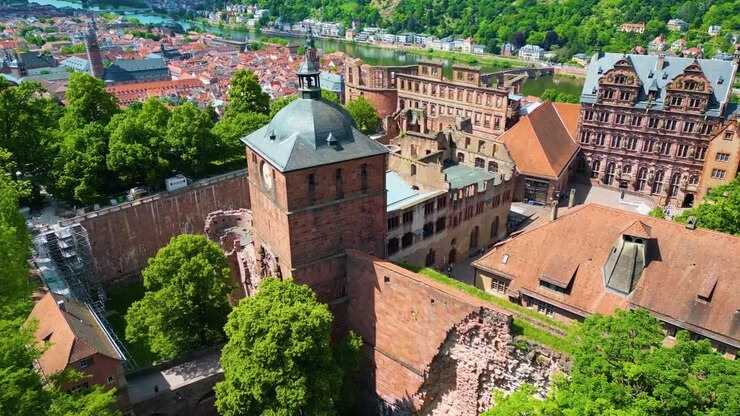
Ruprecht-Karls-Universität Heidelberg
Baden-Württemberg
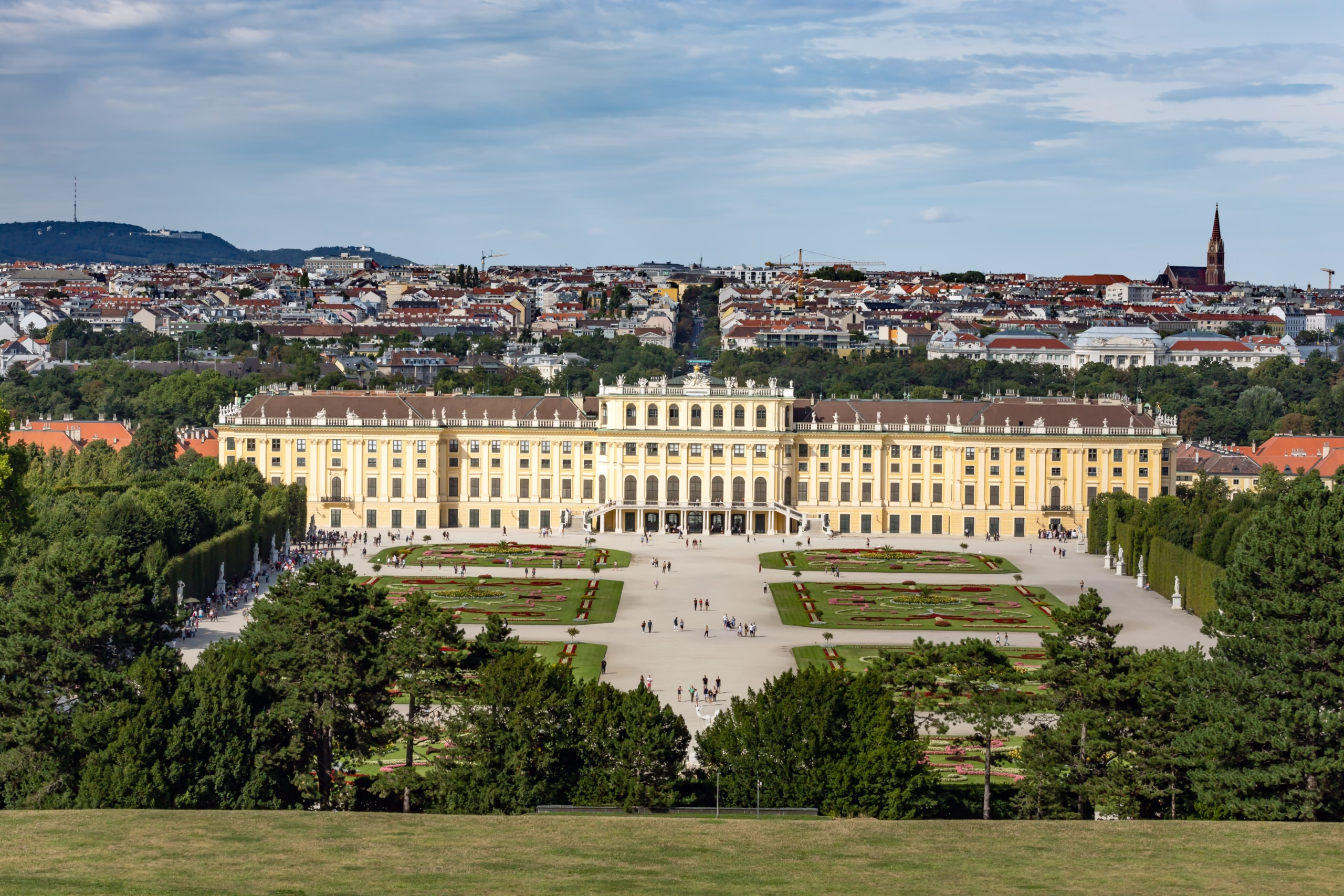
Ludwig-Maximilians-Universität München
Bavaria

Technische Universität München
Bavaria
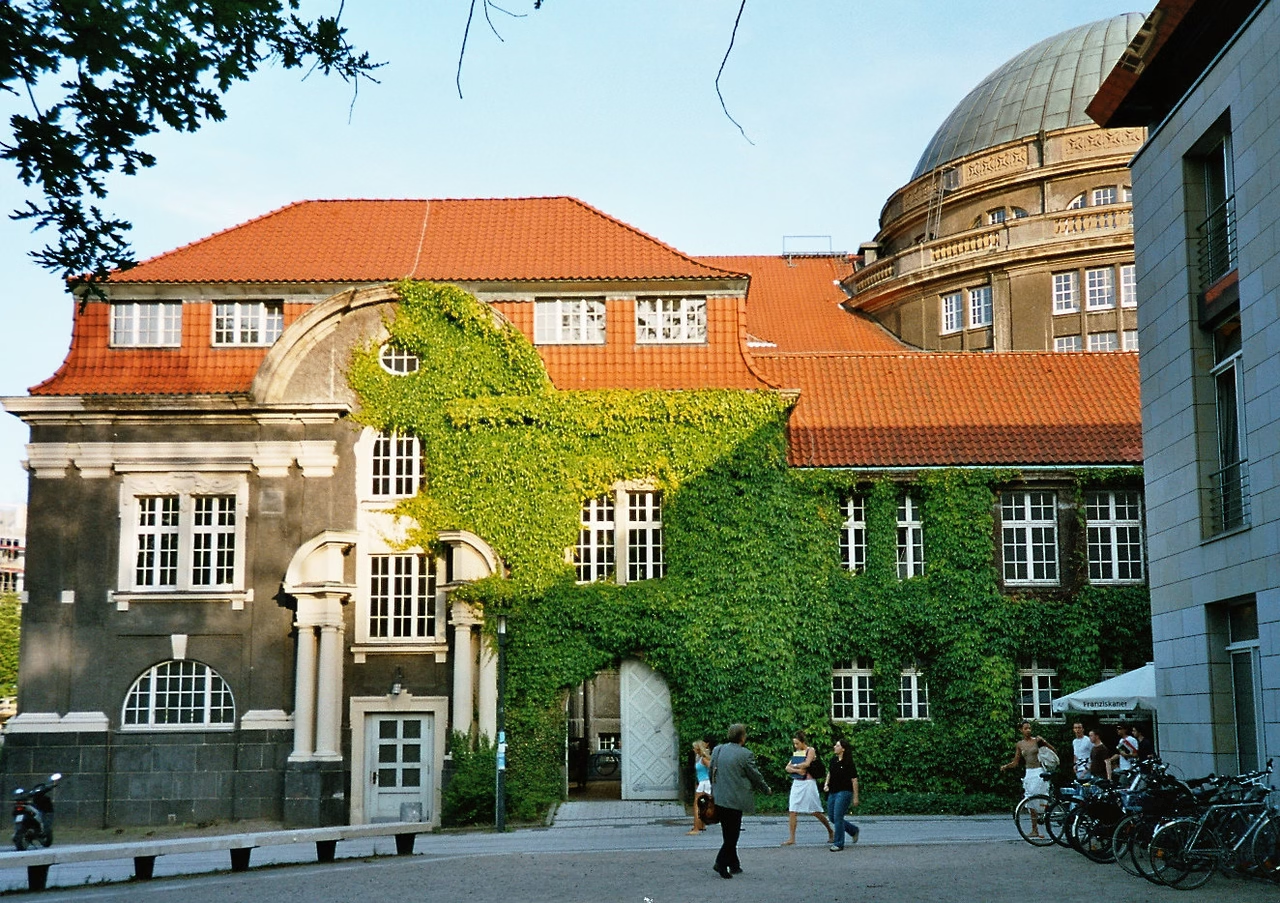
Universität Hamburg
Hamburg
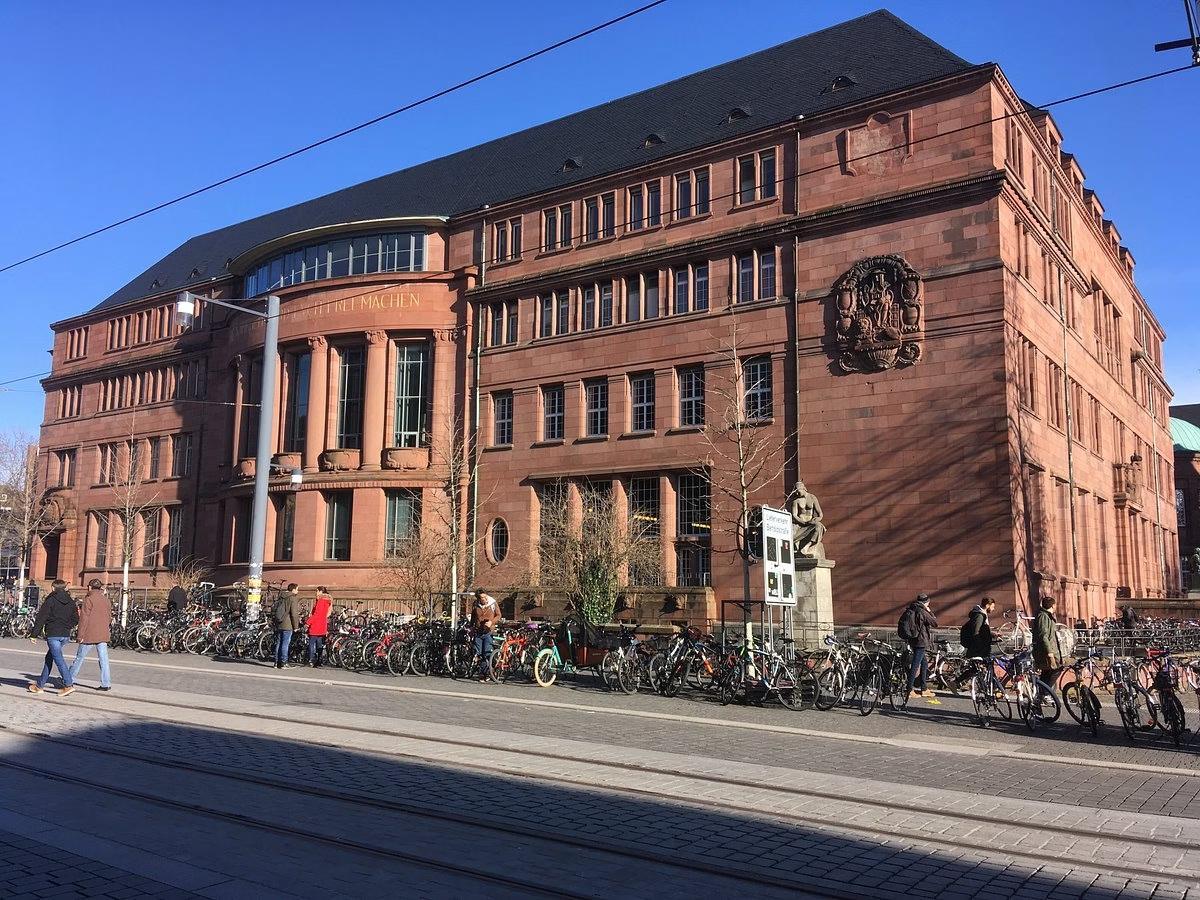
Albert-Ludwigs-Universität Freiburg
Baden-Württemberg
Charité – Universitätsmedizin Berlin
Berlin
Ruprecht-Karls-Universität Heidelberg
Baden-Württemberg
Ludwig-Maximilians-Universität München
Bavaria
Technische Universität München
Bavaria
Universität Hamburg
Hamburg
Albert-Ludwigs-Universität Freiburg
Baden-Württemberg
Ready to apply for MBBS in Germany?
Book a free consult and find out if your NEET score, German language prep, and budget align with a German medical school.